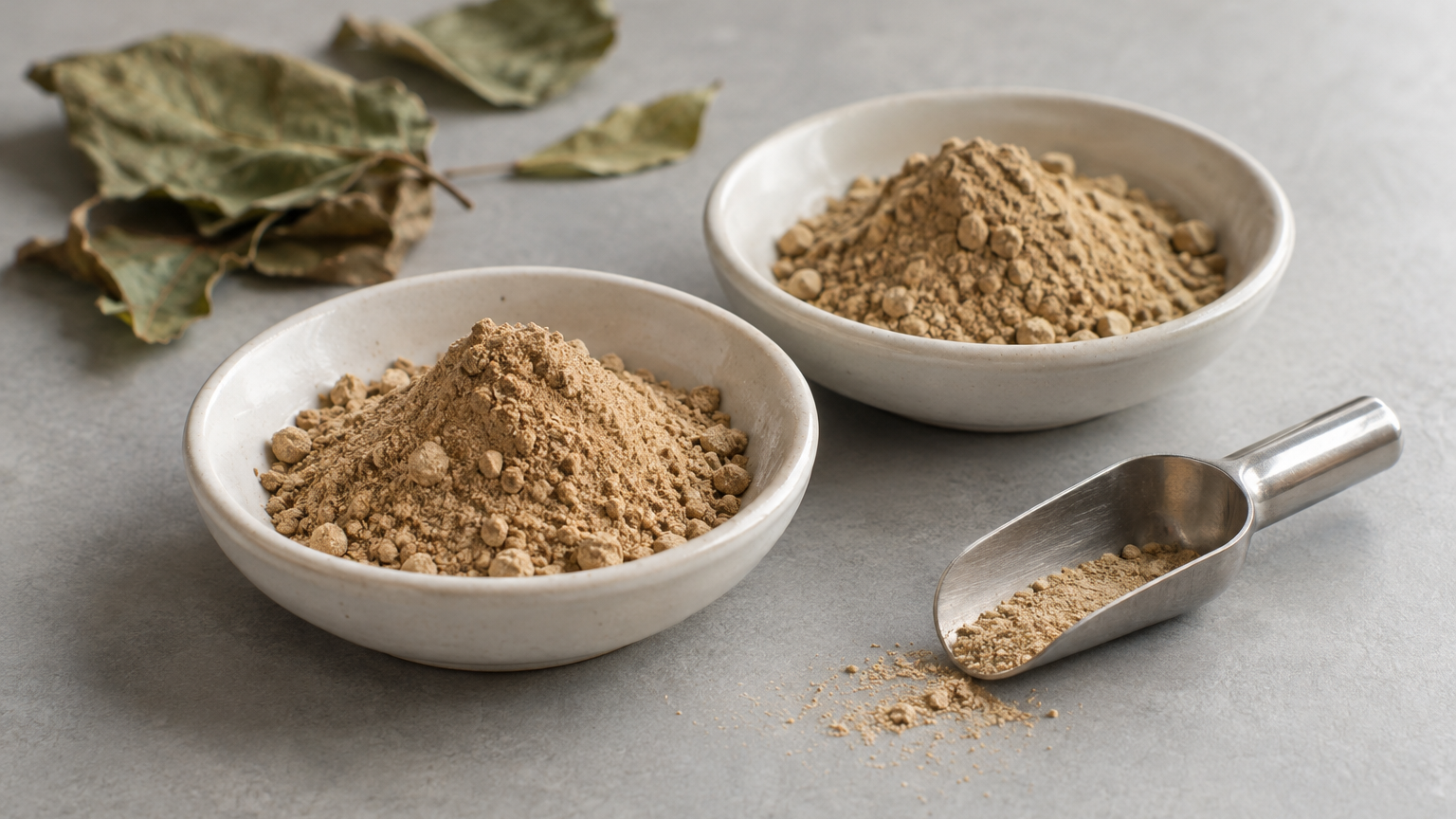
Featured image: AI-generated editorial illustration; not a photograph of a Sinricon batch or facility.
Two botanical extracts can name chlorogenic acid as their marker without being the same ingredient. For purchasing, the useful comparison starts with the plant source and part used—not just the percentage beside the compound name.
This distinction matters when shortlisting a new ingredient or considering an alternative to one already in a formulation. A shared marker is a starting point for comparison, not evidence that one complete extract can replace another.
Start with the plant, not only the marker
Our catalogue includes two examples: Eucommia ulmoides extract uses leaves, while honeysuckle flowers extract uses dried flower buds. Both offer chlorogenic acid specifications, but their botanical identities are different.
| Comparison point | Eucommia extract | Honeysuckle flowers extract |
|---|---|---|
| Botanical source | Eucommia ulmoides Oliv. | Lonicera confusa and related honeysuckle sources; identify the exact species for the selected grade |
| Plant part | Leaves | Dried flower buds |
| Featured marker | Chlorogenic acid | Chlorogenic acid |
| Starting purchase description | Eucommia leaf extract with the required marker specification | Honeysuckle flower-bud extract with the required species and marker specification |
If your formulation calls for a particular botanical, keep that identity in the purchase description. Replacing it with the broader phrase “chlorogenic acid extract” removes information that your formulation and quality teams may need.
Understand what the marker tells you
A marker provides a measurable reference for an extract. The NIH Office of Dietary Supplements explains that standardization can involve measuring selected chemicals and adjusting their amounts for consistency. It also notes that the word “standardized” does not, by itself, establish high quality. Read the NIH explanation of botanical standardization.
For buyers, the practical implication is to separate two questions: “Does this meet the chlorogenic acid specification?” and “Is this the botanical ingredient we want?” Answering the first does not settle the second.
Ask whether the proposed material is a botanical extract standardized to a marker or a highly purified constituent. Make that distinction explicit rather than treating every material with the same compound name as one purchasing category.
Compare equivalent information before comparing price
Once the botanical source is clear, line up the marker specification, analytical method and reporting basis. Ask whether a percentage is reported on a dried basis or for the material as supplied, and whether any carrier forms part of the supplied powder.
The same headline percentage is not enough to resolve a difference in those fields. A concise side-by-side comparison helps your team see whether two quotations cover equivalent requirements or different grades. Our guide to reading a botanical extract COA covers these document checks in more detail.
There is no need to choose the highest marker percentage simply because it is available. Begin with the ingredient and specification your project needs, then compare commercial options against that requirement.
Treat a source change as a new comparison
Consider this illustrative purchasing situation: a formulation specifies Eucommia leaf extract, and a second offer proposes honeysuckle flowers extract with the same chlorogenic acid target. The shared target does not establish that the second material meets the original ingredient requirement.
The next step is to identify the source difference and ask your formulation and quality teams what evaluation would be needed. If the project instead seeks a purified compound, define its identity and purity requirements explicitly rather than assuming a botanical-extract comparison answers that question.
This is a purchasing example, not a claim that either source is better. The appropriate choice depends on the ingredient brief and the evidence for the proposed material.
Discuss the source options with Sinricon
If the botanical source is already fixed, send us its name, the plant part and your target chlorogenic acid specification. If you are still comparing options, tell us the intended application and which source questions remain open.
You can start with the two ingredient profiles above, then contact Sinricon with your approximate quantity and destination country. We can discuss available grades and supporting documentation for the inquiry.
The aim is straightforward: select the right ingredient first, then compare offers for that ingredient—not just for a matching number.